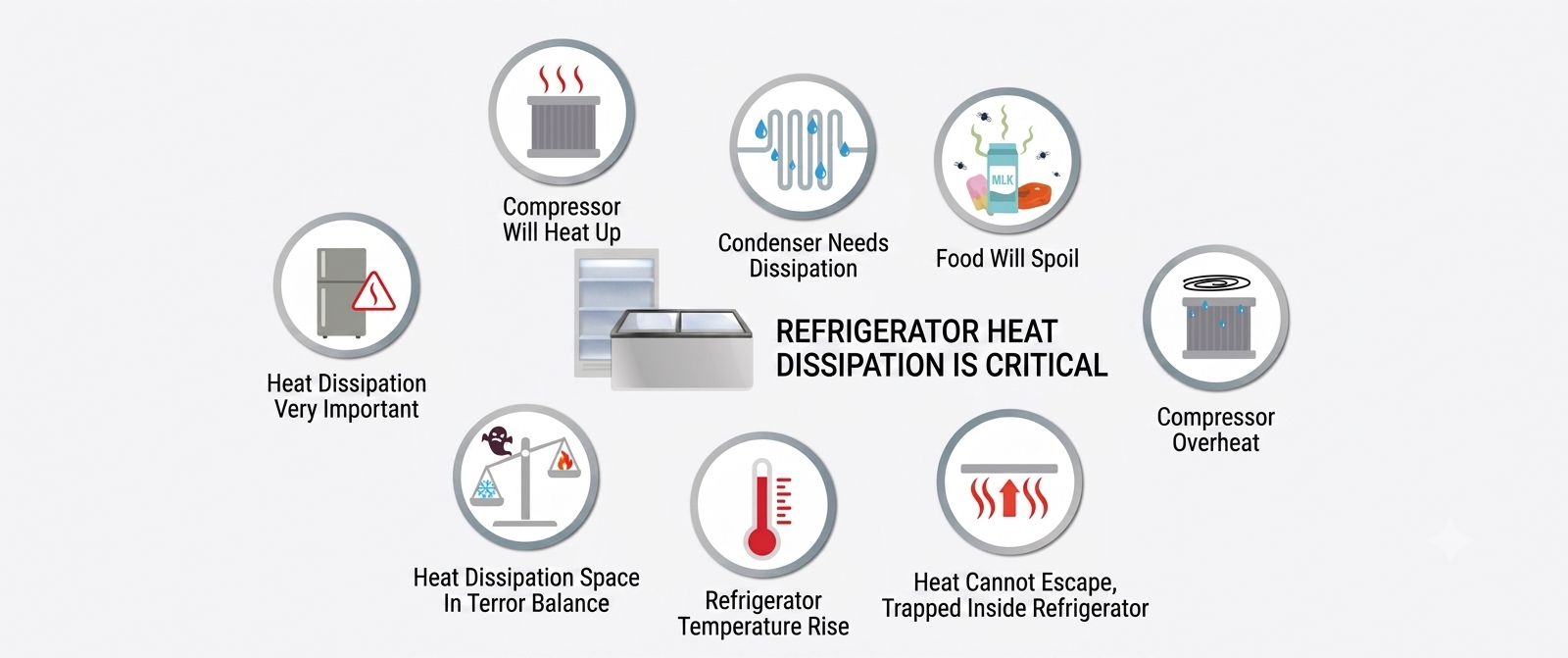
A refrigerator that isn’t cooling properly — whether it’s not cold at all, cold on top but warm on the bottom, or freezing fine but not refrigerating — is one of the most common issues in both household and commercial settings. What looks like a simple cooling problem often hides deeper causes: poor heat dissipation, refrigerant leaks, fan failures, blocked air vents, or abnormal frost buildup. For commercial refrigerators in particular, a cooling imbalance directly leads to spoiled ingredients and operational losses. This guide provides a complete breakdown of why refrigerators stop cooling — and how Dr.AI’s smart temperature controller delivers precision monitoring to prevent it.
Poor Heat Dissipation: The Most Common Yet Most Overlooked Cause
Some warmth on the sides and exterior of a refrigerator is perfectly normal. But when heat dissipation efficiency drops, the compressor runs under sustained overload — leading to reduced cooling. Common causes include:
- The refrigerator is positioned too close to a wall, restricting airflow.
- A dust-clogged condenser obstructing heat exchange.
- Fan blades caked with dust or running at insufficient speed.
This doesn’t just reduce cooling — it drives up electricity consumption, risks compressor damage, and destabilizes product temperatures.
Refrigerant Leak: The Most Dangerous Silent Threat
If your refrigerator shows the following signs, a refrigerant leak is almost certainly to blame:
- The sides of the unit are completely cool to the touch — no warmth at all.
- The compressor runs continuously but cooling is extremely slow.
- The freezer section produces no frost, or the frost pattern is abnormal.
- Refrigerator temperatures fluctuate wildly between warm and cold.
A refrigerant leak pushes the refrigerator into a “sub-healthy cycle” — ultimately resulting in product loss and premature compressor failure.
Blocked Air Vents and Overpacking: Breaking the Cold Air Circulation
A refrigerator relies on its fan to distribute cold air throughout the interior. When air vents are obstructed, you’ll quickly notice:
- The freezer works fine but the refrigerator section doesn’t cool (or the top is cold but the bottom isn’t).
- Poor return airflow increases internal humidity and accelerates frost buildup.
- The compressor sustains damage from prolonged high-load operation.
Fan Failure or Insufficient Speed: Uneven Temperature Distribution
The refrigerator fan is responsible for air circulation and temperature uniformity. Common fan issues include: