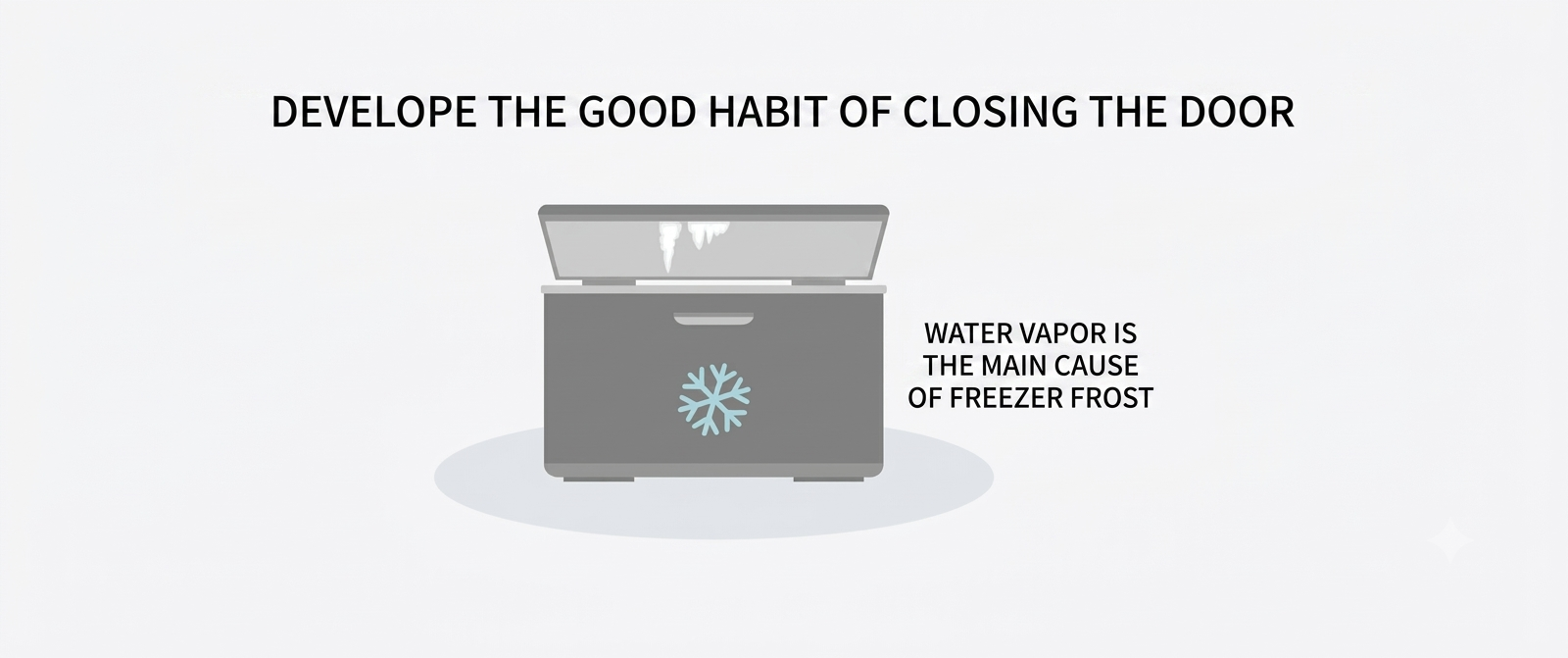
In a commercial setting, refrigerators are the most critical equipment for maintaining ingredient freshness and food safety. However, most refrigerator problems are not caused by mechanical failure — they stem from improper usage habits. Whether it’s a door left slightly open, airflow vents blocked during restocking, or cold air lost from frequent door openings, these habits can lead to surging energy consumption, unstable temperatures, and accelerated frost buildup. Read on for a complete breakdown of how usage habits directly impact refrigerator performance.
Door Left Ajar: The Most Overlooked Energy Drain
If the refrigerator door is not fully sealed, cold air continuously escapes while warm outside air flows in. This not only prevents the unit from reaching its target temperature, but also causes:
- The refrigerator running at high speed for extended periods, causing a sharp increase in power consumption.
- A cooling imbalance where the upper section is cold but the lower section is not.
- Accelerated spoilage of ingredients, increasing food safety risks.
- Rapid frost buildup on the evaporator, adding strain to the compressor and potentially leading to breakdowns.
How Does a Smart Thermostat Prevent Losses from a Door Left Ajar?
The Smart Universal Refrigerator Thermostat, paired with the Amber APP, provides the following proactive protection:
- Automatic alert detection: Detects when the door is not properly closed and sends real-time push notifications.
- Intelligent diagnosis: Distinguishes between a genuine temperature rise and a temporary spike caused by a brief door opening.
- Rapid response: Helps operators take immediate action to prevent food spoilage and unnecessary energy waste.
Frequent Door Opening and Closing: High Energy Use × Heavy Frosting × High Compressor Load
Commercial refrigerators are opened and closed repeatedly during peak hours. Each opening allows warm, humid air to rush in, resulting in:
- Rapid frost accumulation on the evaporator, reducing cooling efficiency.
- Frequent compressor cycling, significantly increasing power consumption.
- Moisture condensing on products, affecting their appearance and shortening shelf life.
- Decreased long-term operating efficiency, shortening the overall lifespan of the unit.
Smart Defrost × Door-Open Detection: Dual Benefits for Energy Savings and Stability
The Dr. AI Smart Universal Thermostat offers multiple energy-saving features:
- Door-open detection: Prevents the compressor from being triggered unnecessarily by brief door openings, reducing wear and tear.
- Dynamic smart defrost: Activates defrost cycles based on actual frost levels, avoiding unnecessary energy use.
- Data analytics: Identifies time periods with abnormal door-opening frequency to help improve operational habits.
Blocked Air Vents During Restocking: The Most Common Cause of Poor Cooling
When restocking, overpacking the refrigerator and blocking the air vents prevents cold air from circulating, which leads to:
- The freezer section functioning normally while the refrigeration section fails to cool — causing a complete cooling breakdown.
- Reduced cooling coil efficiency, with the compressor running continuously but unable to bring temperatures down.
- Unnecessary increases in energy consumption and electricity costs.
How Does a Smart Thermostat Accurately Pinpoint the Problem?
When uneven cooling occurs, the Dr. AI Smart Thermostat uses data to help diagnose the root cause:
- Multi-sensor monitoring: Analyzes temperature zones using multi-point sensors and cloud-based trend charts.
- Abnormal zone alerts: Quickly identifies whether the issue is caused by blocked vents, frost buildup, or a fan malfunction, significantly reducing unnecessary service call costs.
Environmental Factors: Humidity, Heat Sources, and Direct Sunlight
Taiwan’s humid climate, combined with high kitchen temperatures, places additional strain on commercial refrigerators:
- Humidity causes rapid frost buildup on the evaporator.
- The unit’s casing and electronic components corrode more quickly.
- Condenser heat dissipation becomes less effective, resulting in an overall drop in performance.
Frequently Asked Questions (FAQ)
Q1: How long does it take for a door left ajar to affect the refrigerator’s cooling?
As little as 3 to 5 minutes is enough to cause an abnormal temperature rise and push the refrigerator into a high energy consumption state.
Q2: What problems does a blocked air vent cause?
Blocking the air vent disrupts cold air circulation, causing uneven cooling inside the unit, increased power consumption, and added stress on the compressor.
Q3: Can a smart thermostat really reduce energy consumption for commercial refrigerators?
Yes. Through precise temperature control, dynamic defrost, and door-open detection, power consumption can be reduced by an average of 10–30%.
Q4: Does frequent door opening always cause frost buildup?
Yes. Large amounts of moisture enter the unit each time the door is opened. Upon contact with cold surfaces, this moisture accelerates frost buildup on the evaporator and significantly reduces cooling efficiency.
Q5: Is the installation of a smart thermostat complicated?
No major modifications to the unit are required. Installation is quick, cost-effective, and compatible with commercial refrigerators from all major brands.
The right usage habits, combined with intelligent management, make your refrigerator more reliable and efficient. With Dr. AI Refrigerator Doctor, you not only protect your equipment — you safeguard your ingredient quality and business revenue.