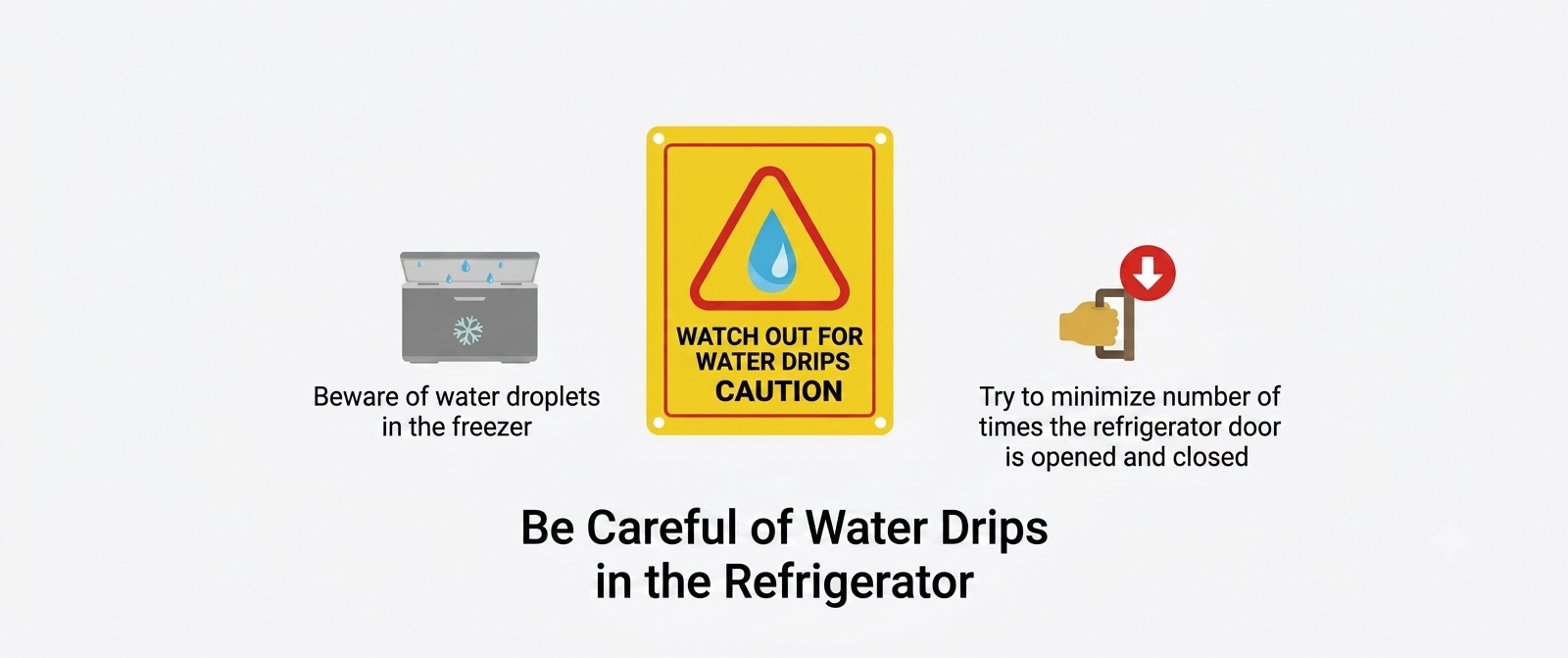
Condensation, water droplets, water pooling, and glass fogging are among the most common issues encountered in both household and commercial refrigerators. These problems not only affect appearance and user experience — if left unaddressed, they can also lead to higher energy consumption, evaporator icing, reduced cooling performance, and food safety risks. This article provides a comprehensive breakdown of the causes, impacts, and solutions for moisture-related problems in refrigerators.
Main Causes of Condensation, Water Droplets, and Water Accumulation in Refrigerators
Condensation from Humid Air Entering Through the Door
Every time the refrigerator door is opened, warm, moisture-laden outside air enters the cabinet and immediately condenses upon contact with the cold interior surfaces. In Taiwan’s high-humidity climate, this effect is especially pronounced and can lead to:
- Water pooling at the bottom of the refrigerator compartment.
- Water droplets and dripping along the interior walls.
- Rapid frost buildup on the evaporator, reducing cooling efficiency.
If the refrigerator door is not properly closed or the door gasket has deteriorated, moisture can continuously seep in, causing persistent condensation.
Placing Hot Food Directly Inside Causes a Sudden Spike in Humidity
Placing uncooled soups, beverages, or large quantities of fruits and vegetables directly into the refrigerator rapidly raises the internal humidity, leading to:
- Heavy water droplet buildup on cold interior surfaces.
- Excessive load on the condensate drain pan.
- Reduced airflow and heat exchange efficiency, causing water to leak from the bottom or rear of the unit.
Blocked Air Ducts Cause Abnormal Frost Buildup
When the air outlet or return air inlet is obstructed by stored items, cold air circulation is disrupted, resulting in:
- Uneven temperature distribution between upper and lower shelves.
- Moisture unable to circulate out normally, increasing condensation and water pooling.
- Simultaneous decline in both freezer and refrigerator performance.
Why Glass-Door Refrigerators Fog Up
Glass-door display cases are a staple in retail settings, but they are also the most prone to fogging. When the ambient temperature is around 28–32°C and humidity exceeds 70%, the warm air rushing in when the door opens hits the cold inner surface of the glass and instantly creates fog. This is especially common in high-traffic stores or during summer afternoons.
Effects of Condensation, Water Accumulation, and Fogging on Refrigerators and Businesses
Reduced Cooling Performance and Higher Energy Consumption
The higher the moisture level and the thicker the frost layer, the lower the evaporator efficiency — forcing the compressor to run more frequently, which causes:
- A significant increase in electricity consumption.
- Shortened equipment lifespan.
- Greater risk of food spoilage.
Damage to Store Image and Customer Experience
Fogged-up glass doors prevent customers from clearly seeing the products inside, reducing their willingness to purchase. For display cases, a clear, unobstructed view is the brand’s first impression.
Increased Food Safety Risks
The high-humidity environment accelerates the growth of bacteria and mold, shortens the shelf life of food, and causes unpleasant odors to develop inside the refrigerator — all of which pose serious risks for the food service and retail industries.
The Most Effective Solution: Intelligent Temperature Control and Smart Defogging Management
Dr. AI Freezer Doctor Smart Temperature Controller
This system integrates AI, IoT, and big data, featuring the following core capabilities:
- Precision Sensing: Supports multiple NTC and PT100 sensors (capable of measuring down to -100°C).
- Active Monitoring: Automatically detects door-open status, moisture levels, and frost layer thickness.
- Dynamic Smart Defrost: Initiates defrosting only when actually needed, eliminating unnecessary energy waste.
- Automatic Defogging Control: Applies intelligent temperature management to glass doors to prevent fogging.
- Remote Connectivity: Monitor your units and receive fault alerts anytime via the Amber App.
Benefits of Using a Smart Temperature Controller in Commercial Refrigerators
- Significantly reduces fogging, water droplets, and water pooling.
- Minimizes frost layer buildup, improving cold air circulation efficiency.
- Reduces compressor strain and extends equipment lifespan.
- Lowers maintenance costs and enhances store presentation.
- Ensures a stable, safe environment for food preservation.
Frequently Asked Questions (FAQ)
Q1: Does water pooling in my refrigerator mean it’s broken?
Not necessarily. Common causes include opening the door too frequently, moisture seeping in through a worn gasket, or placing hot food inside. Check whether the door gasket seals properly and ensure the air vents are not blocked.
Q2: How can I fix fogging on commercial refrigerator glass doors?
We recommend using an intelligent defogging system that automatically activates heating based on ambient humidity levels, preventing fogging without running at full power continuously — saving energy in the process.
Q3: Will condensation affect the cooling performance of a refrigerator?
Yes. Frost buildup caused by moisture impedes heat exchange, reducing evaporator efficiency — which in turn weakens cooling performance and increases power consumption.
Q4: Can a smart temperature controller actually reduce water accumulation?
Yes. A smart temperature controller actively monitors frost buildup and humidity levels, automatically adjusting operating modes to maintain a dry interior and consistent cooling performance.
Most refrigerator condensation and fogging issues stem from environmental moisture and temperature differentials. With the Dr. AI Freezer Doctor smart temperature controller and automatic defogging system, moisture can be managed at the source — improving operational efficiency, maintaining clear product visibility, and making it the go-to solution for commercial refrigerator management.